Nike SIM

Nike SIM

Nike SIM

A better way to engage with product

A better way to engage with product

A better way to engage with product

[ ORIGIN ]


A concept expansion of Nike's internal operations tool, built to standardize how clearance stores handle product flow. Designed from the floor up by someone who actually worked it.
[ ISSUE AND USERS ]
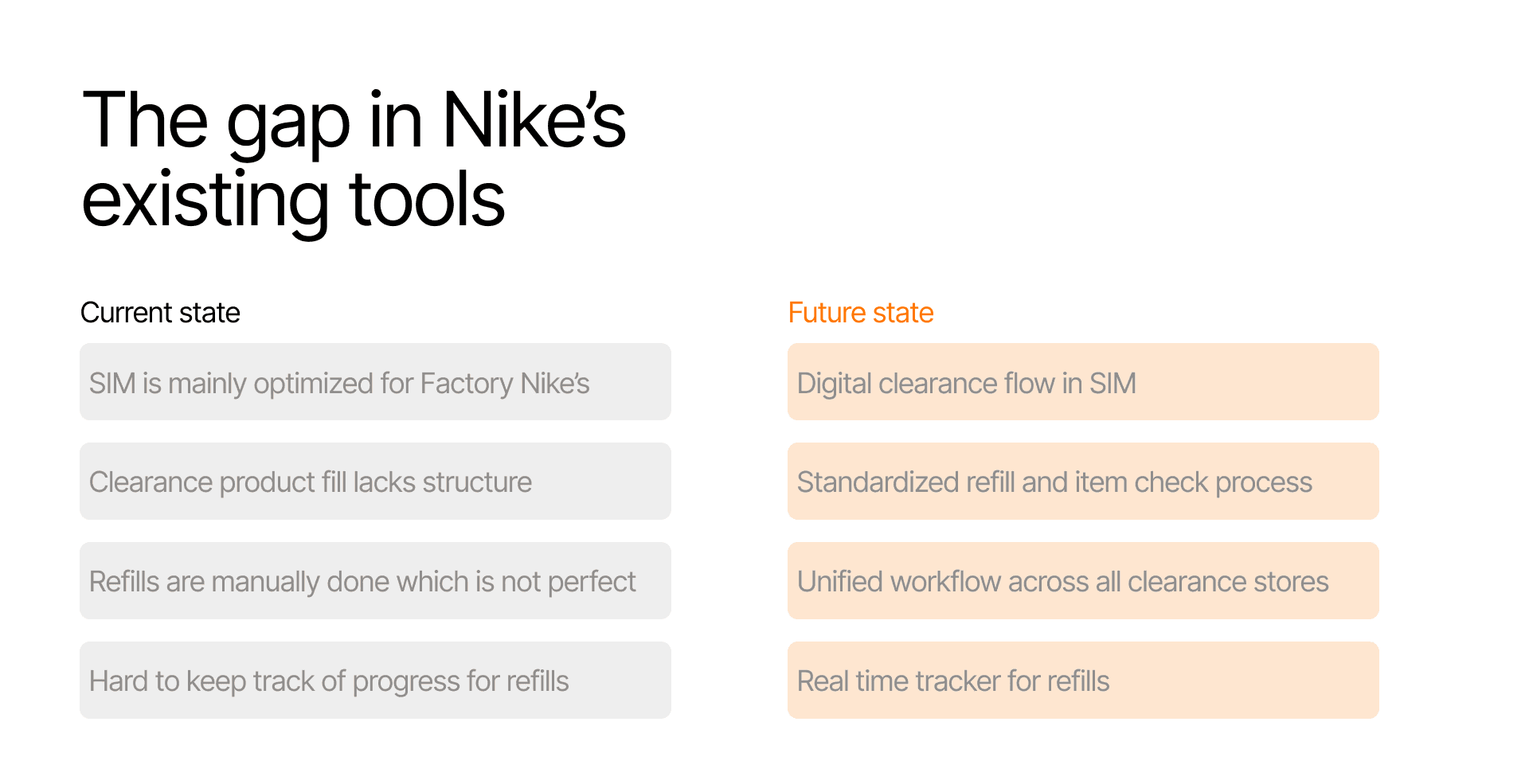
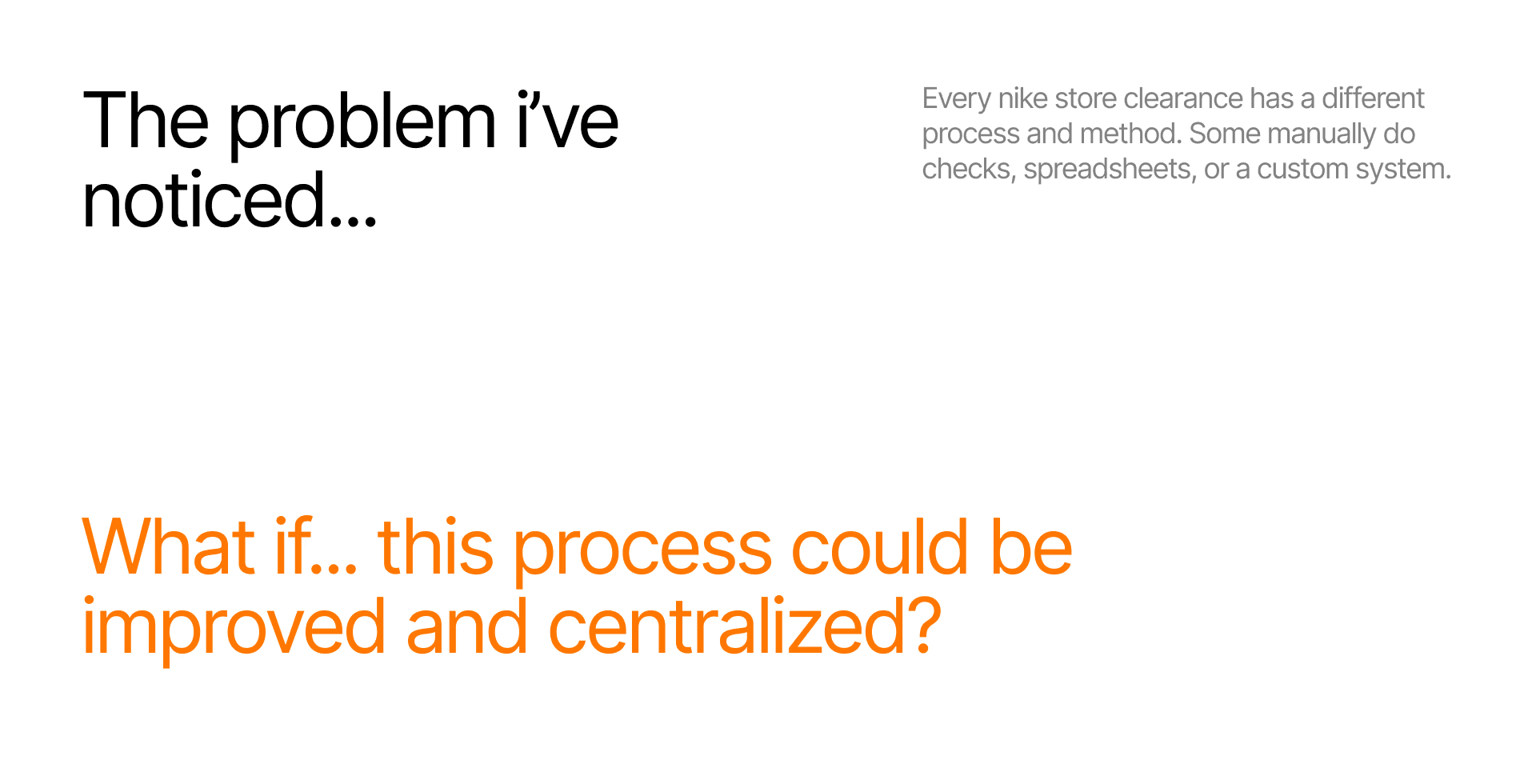
SIM was built for Factory Nike. Clearance was never really part of the picture and you feel that every single day on the floor. Refills are manual, fill progress is invisible, and leadership has no real time view of anything.


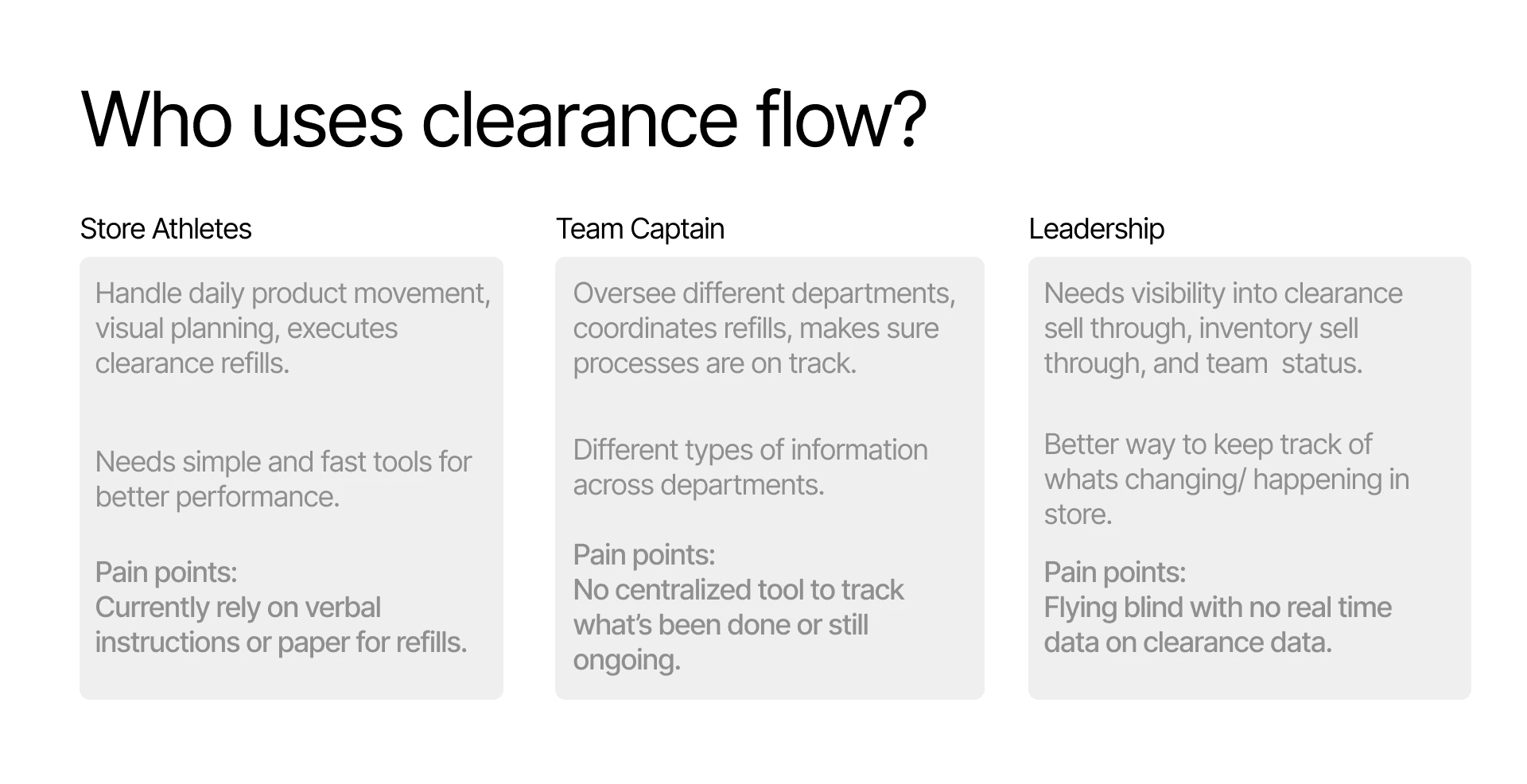
Before touching a single screen I mapped out who this was actually being built for because it isn't just one type of person. Store athletes need tools that are fast and simple and don't slow them down.


Team captains need to know what's been done and what's still open without chasing anyone down. Leadership needs real time data on sell through, inventory, and team status and right now none of that exists. Every decision in this project connects back to one of these three people.

SIM was built for Factory Nike. Clearance was never really part of the picture and you feel that every single day on the floor. Refills are manual, fill progress is invisible, and leadership has no real time view of anything.


Before touching a single screen I mapped out who this was actually being built for because it isn't just one type of person. Store athletes need tools that are fast and simple and don't slow them down.


Team captains need to know what's been done and what's still open without chasing anyone down. Leadership needs real time data on sell through, inventory, and team status and right now none of that exists. Every decision in this project connects back to one of these three people.

SIM was built for Factory Nike. Clearance was never really part of the picture and you feel that every single day on the floor. Refills are manual, fill progress is invisible, and leadership has no real time view of anything.


Before touching a single screen I mapped out who this was actually being built for because it isn't just one type of person. Store athletes need tools that are fast and simple and don't slow them down.


Team captains need to know what's been done and what's still open without chasing anyone down. Leadership needs real time data on sell through, inventory, and team status and right now none of that exists. Every decision in this project connects back to one of these three people.

SIM was built for Factory Nike. Clearance was never really part of the picture and you feel that every single day on the floor. Refills are manual, fill progress is invisible, and leadership has no real time view of anything.


Before touching a single screen I mapped out who this was actually being built for because it isn't just one type of person. Store athletes need tools that are fast and simple and don't slow them down.


Team captains need to know what's been done and what's still open without chasing anyone down. Leadership needs real time data on sell through, inventory, and team status and right now none of that exists. Every decision in this project connects back to one of these three people.

[ SOLUTION ]

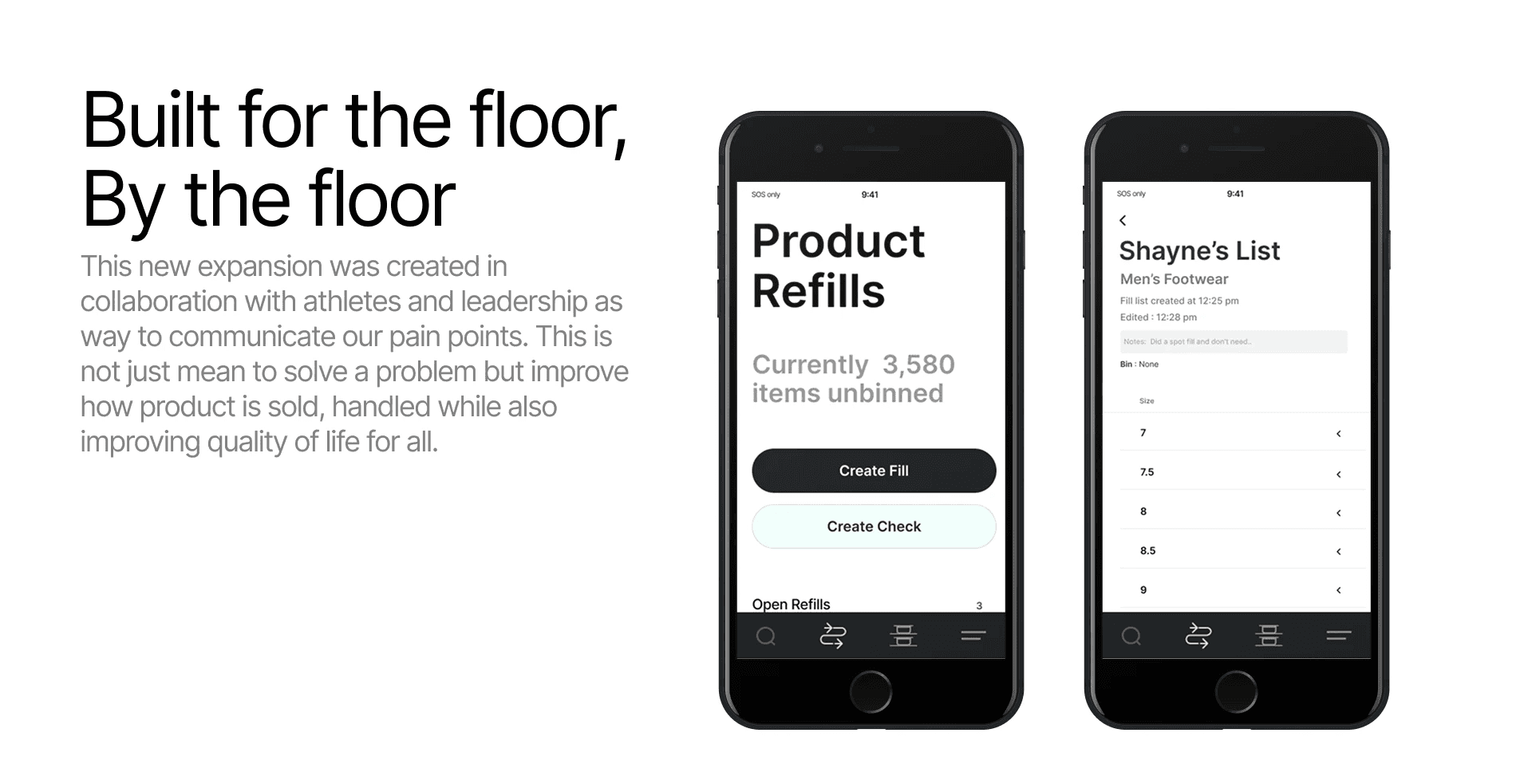
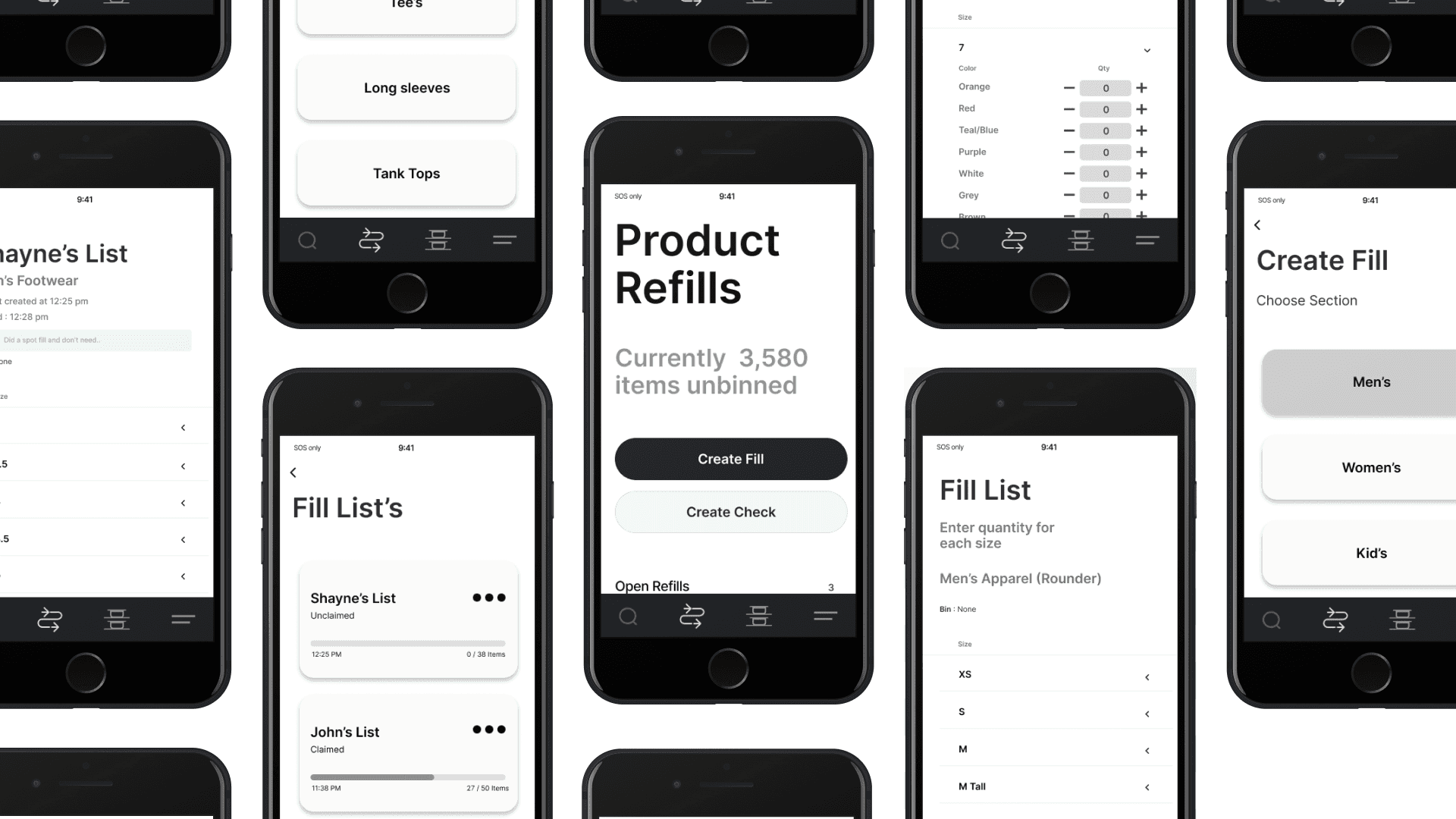
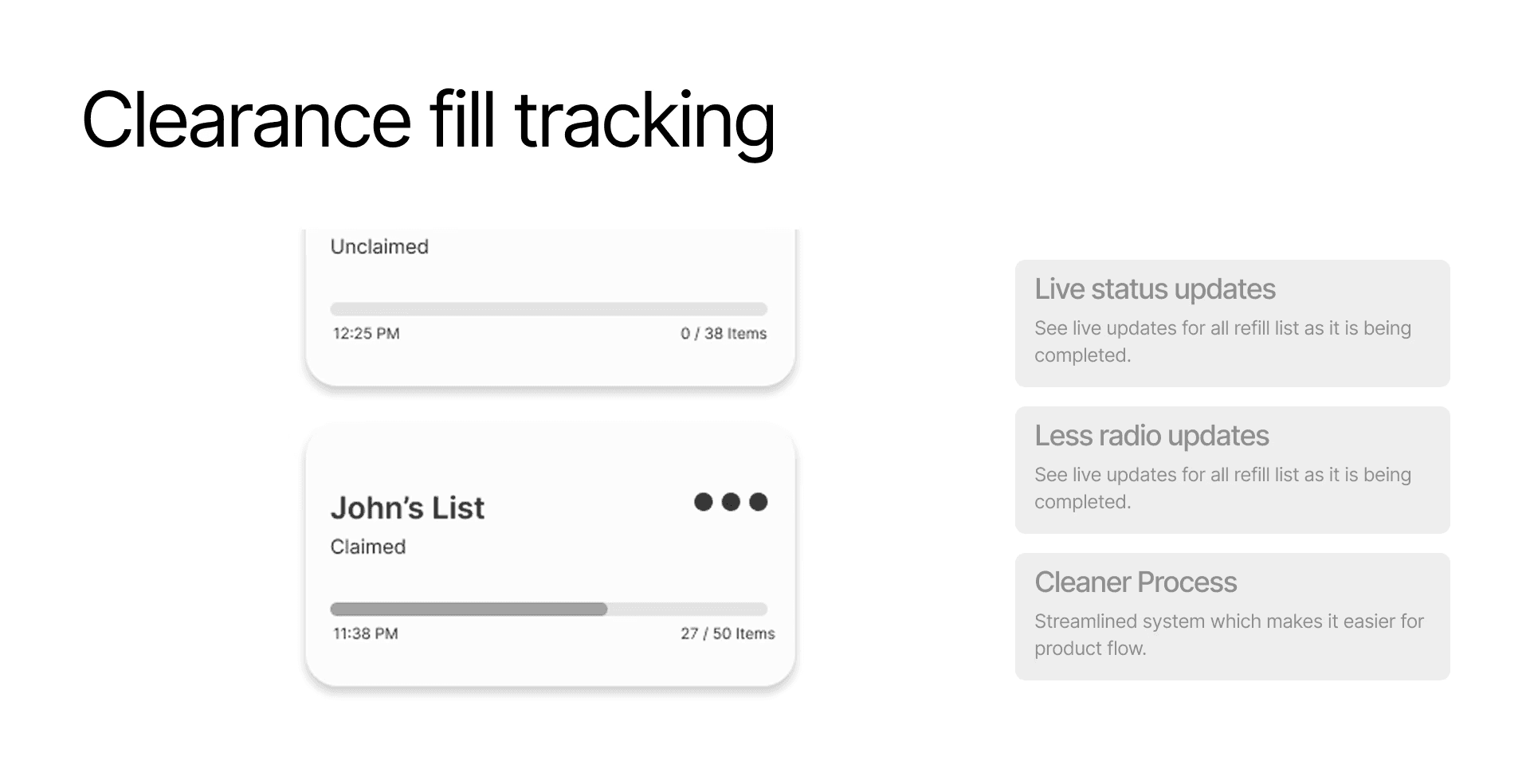
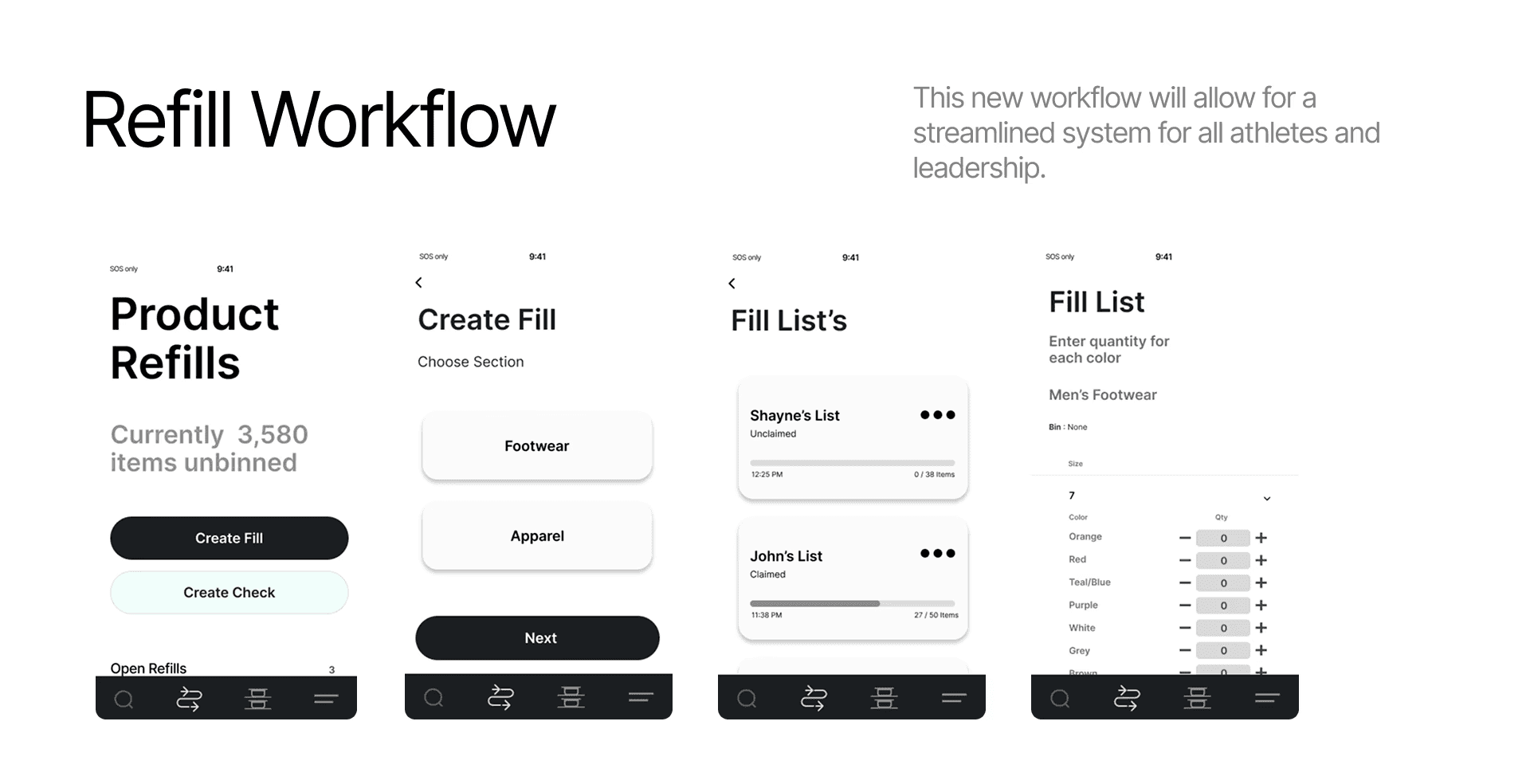
The answer was one module inside SIM built specifically for clearance. A refills dashboard that shows live fill progress as items are pulled. A creation flow that starts with department and section instead of bin status because that's how clearance teams actually think and a connected system that ties fill tracking, item checks, and BOH communication into one place for the first time.
[ BEFORE & AFTER ]


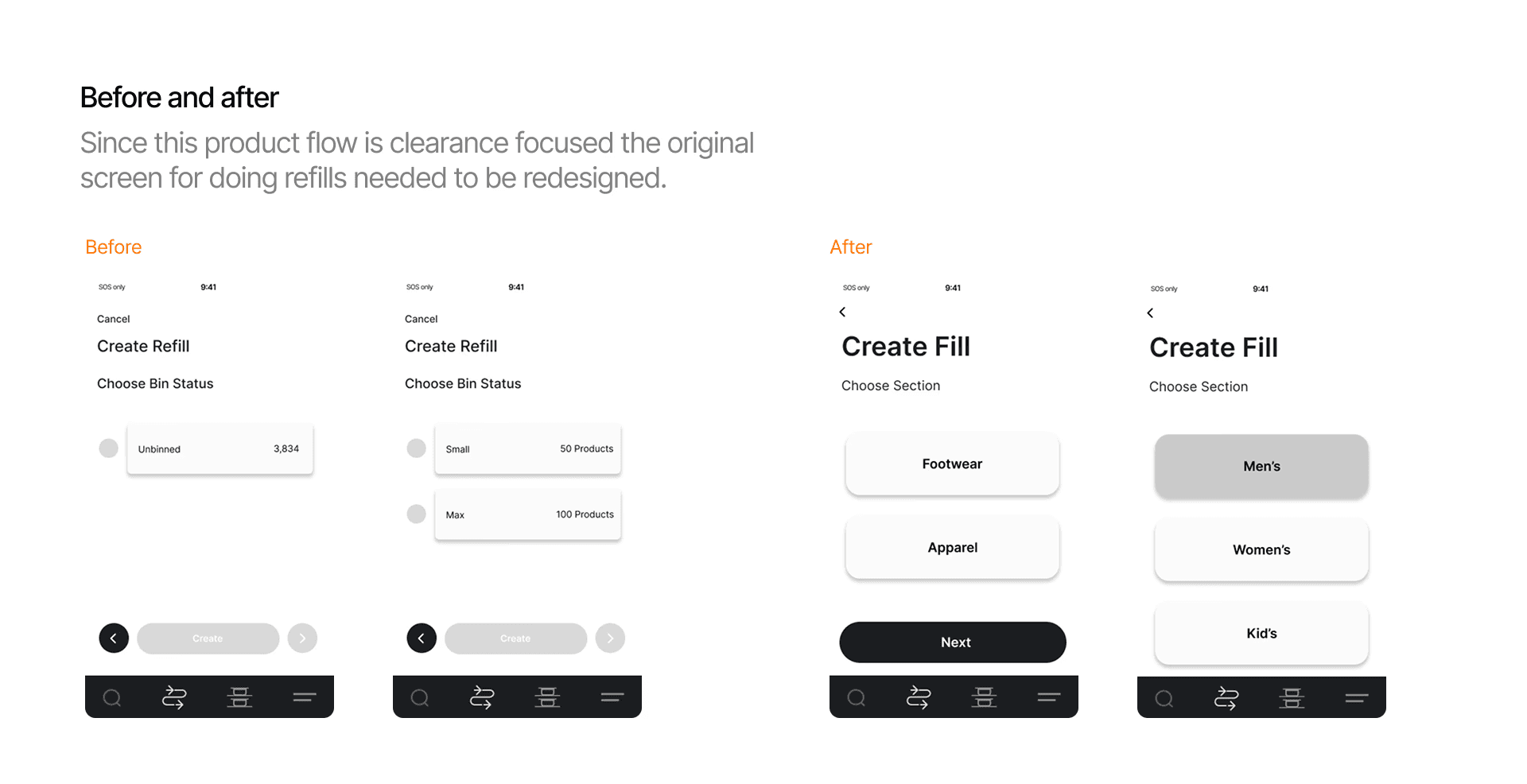
This is the clearest way to see what changed. The original screen asks users to pick a bin status and product count which works fine in a factory context but means nothing in a clearance store. The redesign starts with department and section, mirrors how the team already thinks, and cuts out every unnecessary step. Same task. Totally different experience.


[ FEATURES ]


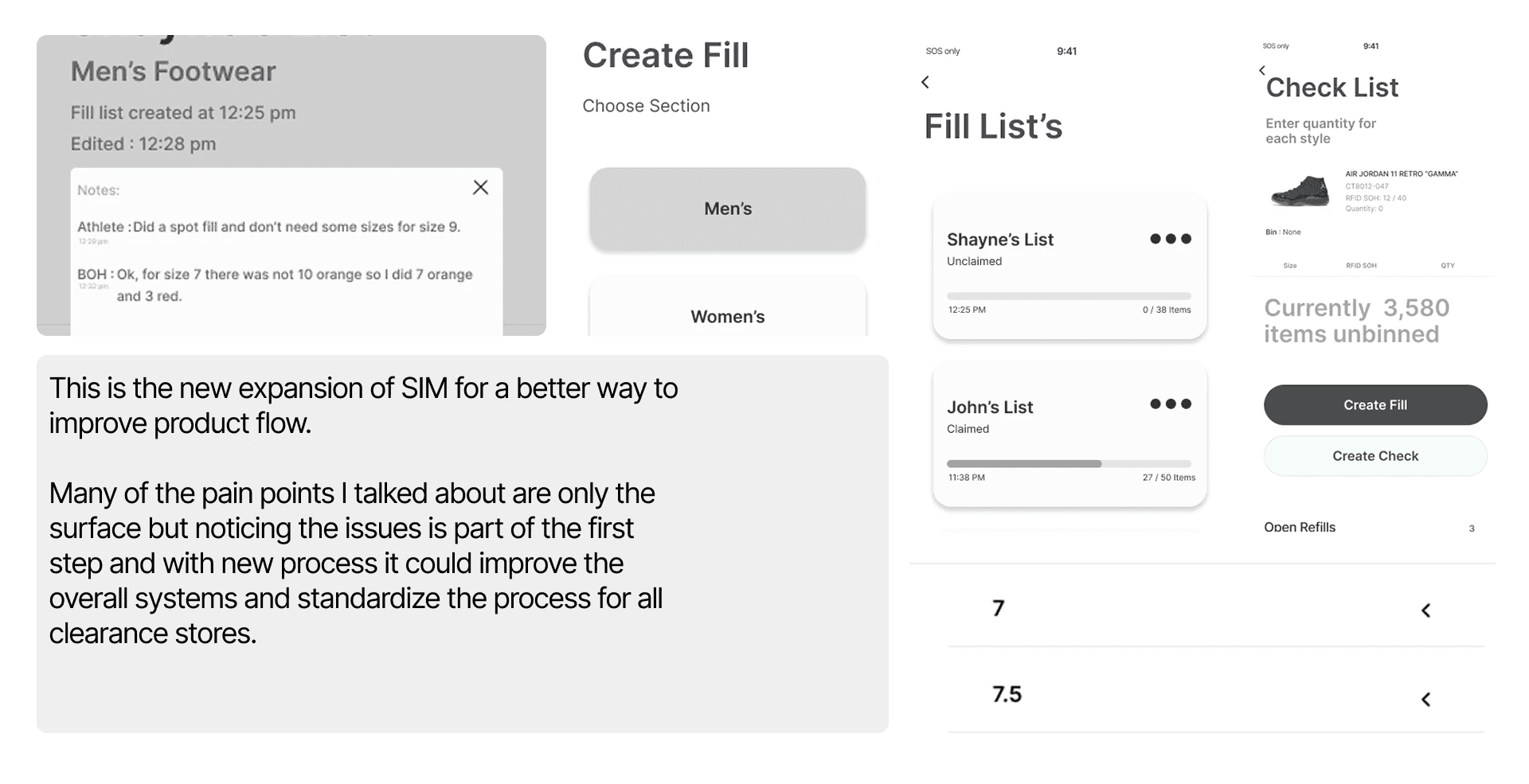
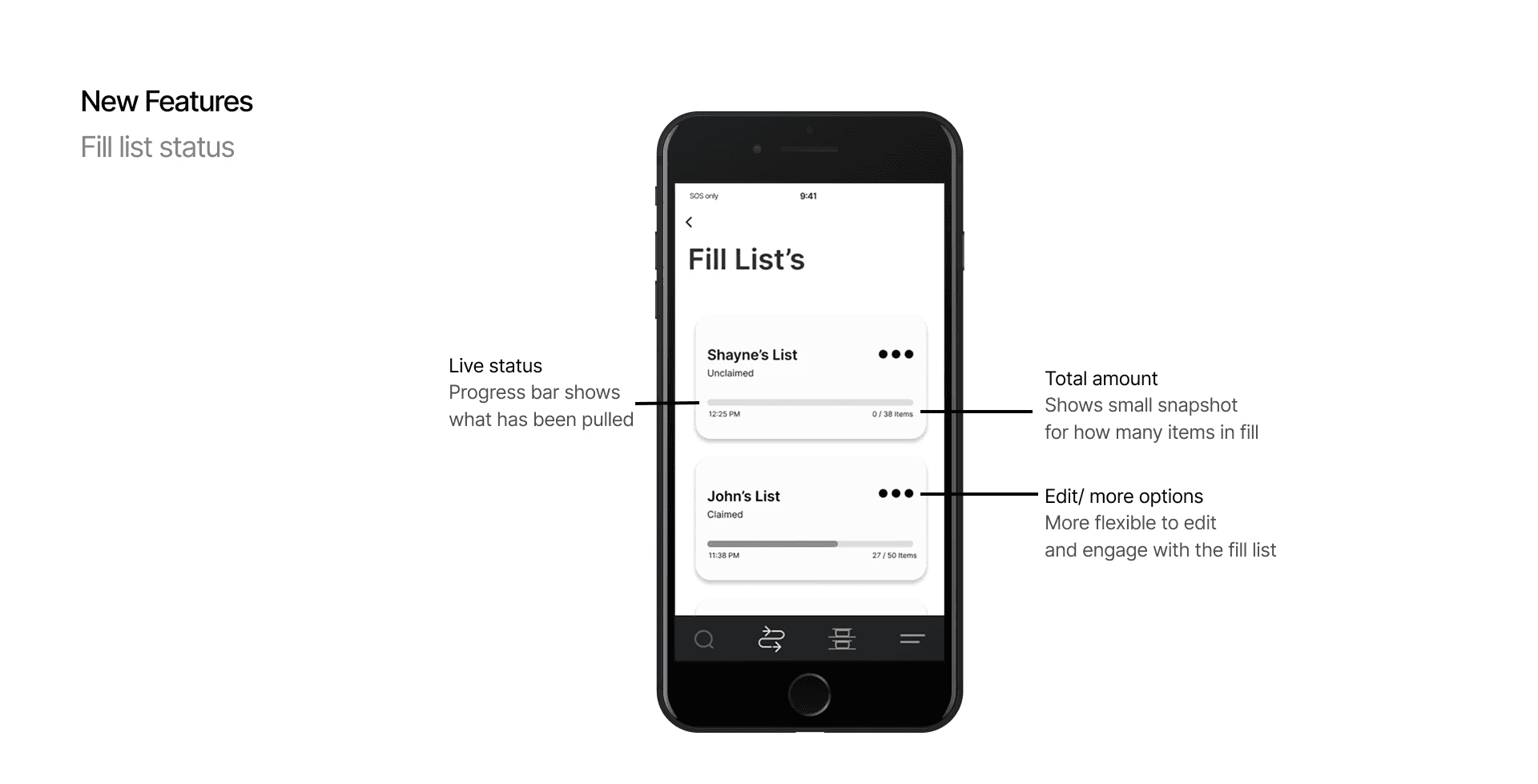
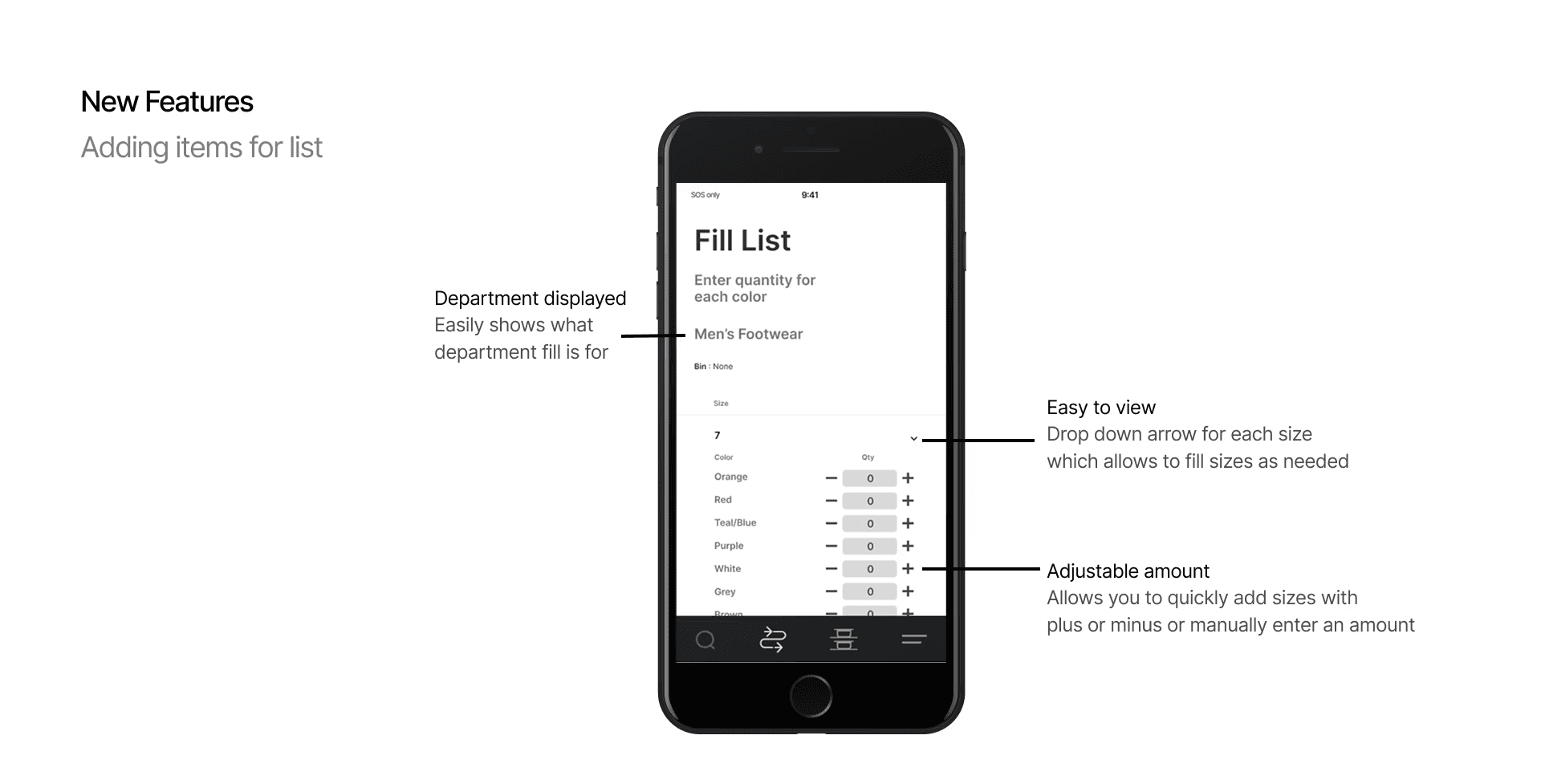
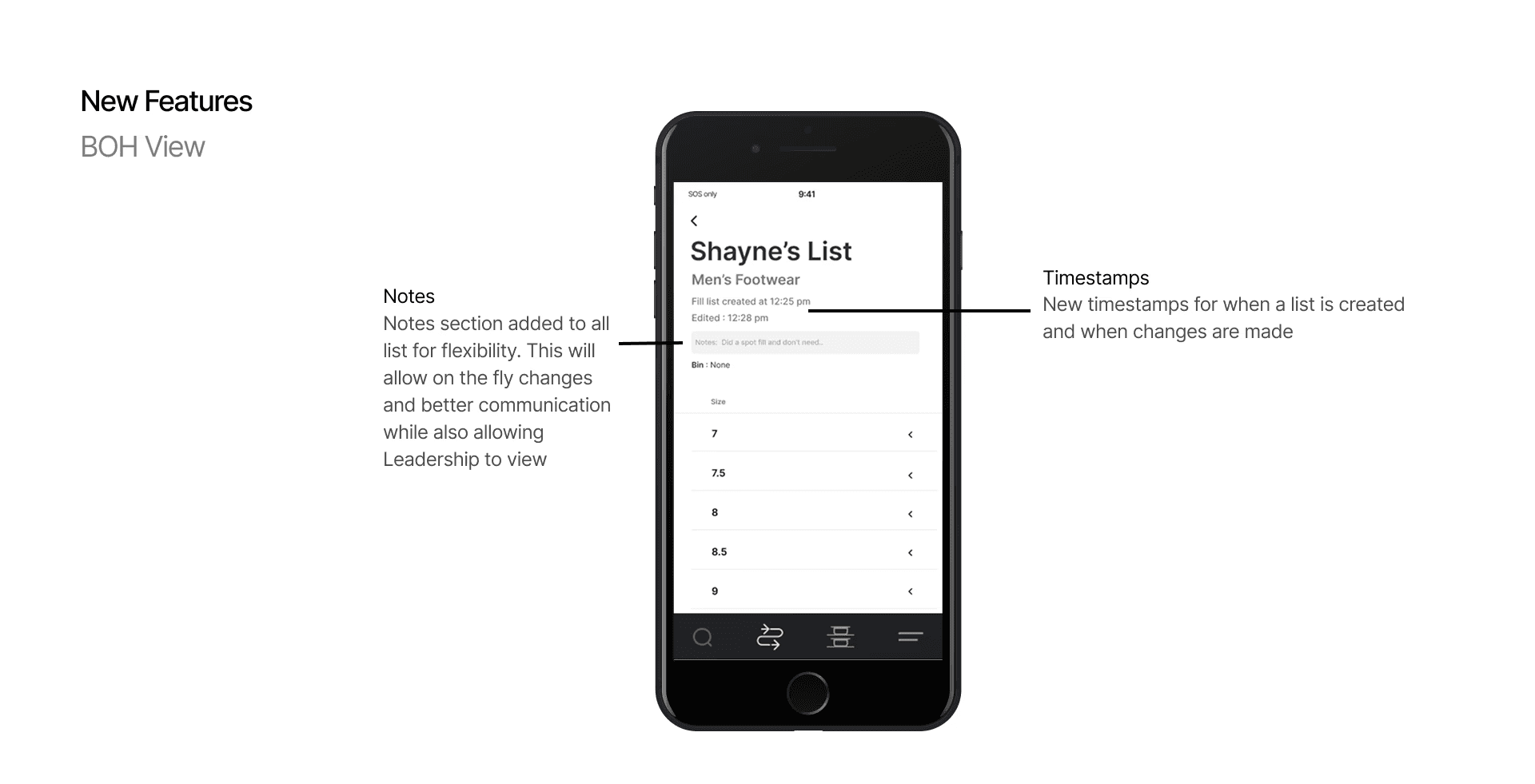
Fill list shows live claim status, a progress bar, item counts, and edit options so everyone knows what's being handled without asking anyone. Item entry is organized by department with expandable size rows and quick quantity controls. A notes section on every list keeps athletes and BOH connected directly in the system with timestamps on every change.
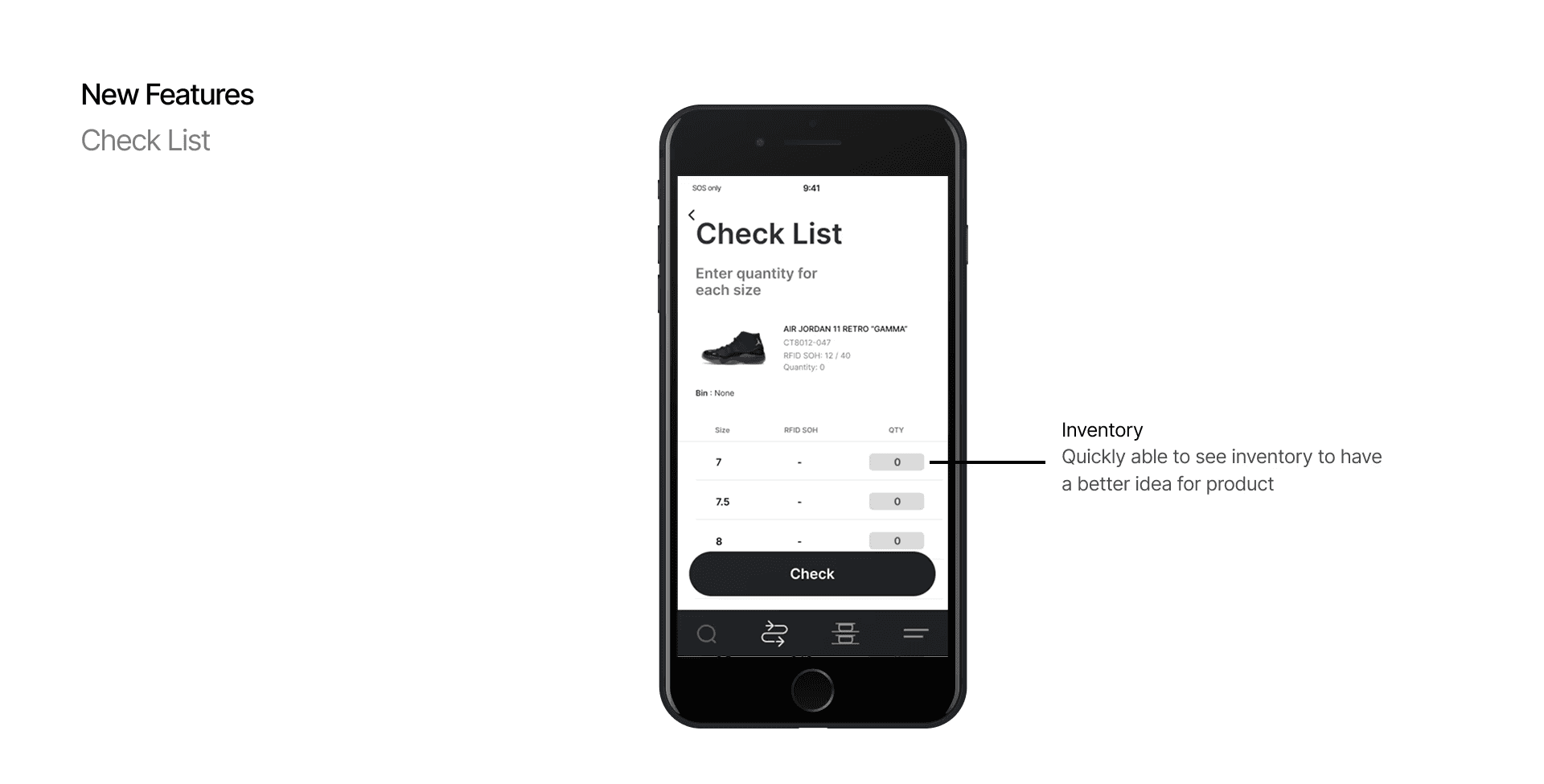
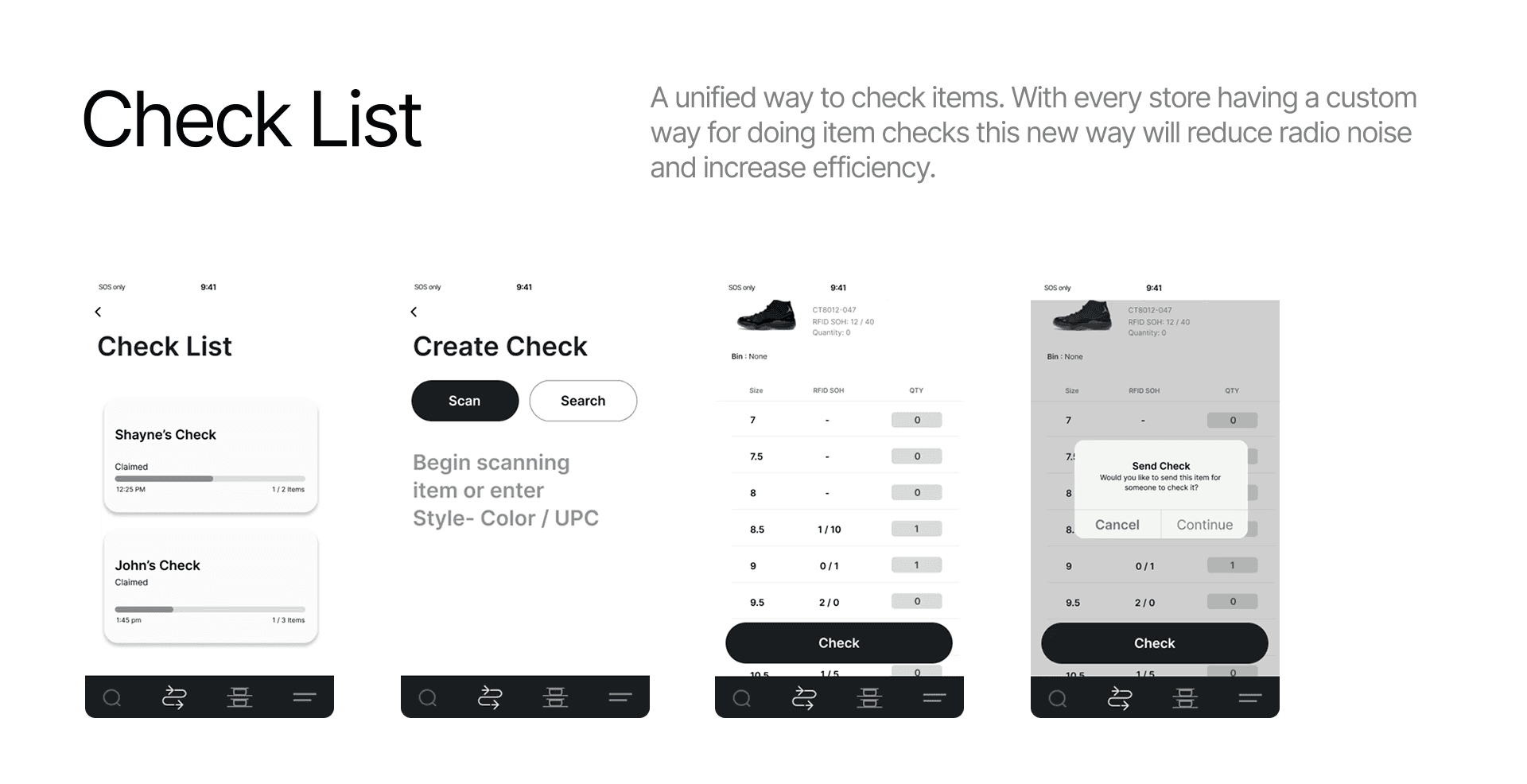
Item checks got a complete overhaul. Scan or search an item, see RFID inventory by size, fill your quantities, and send a check directly through the app. No radio calls, no waiting.
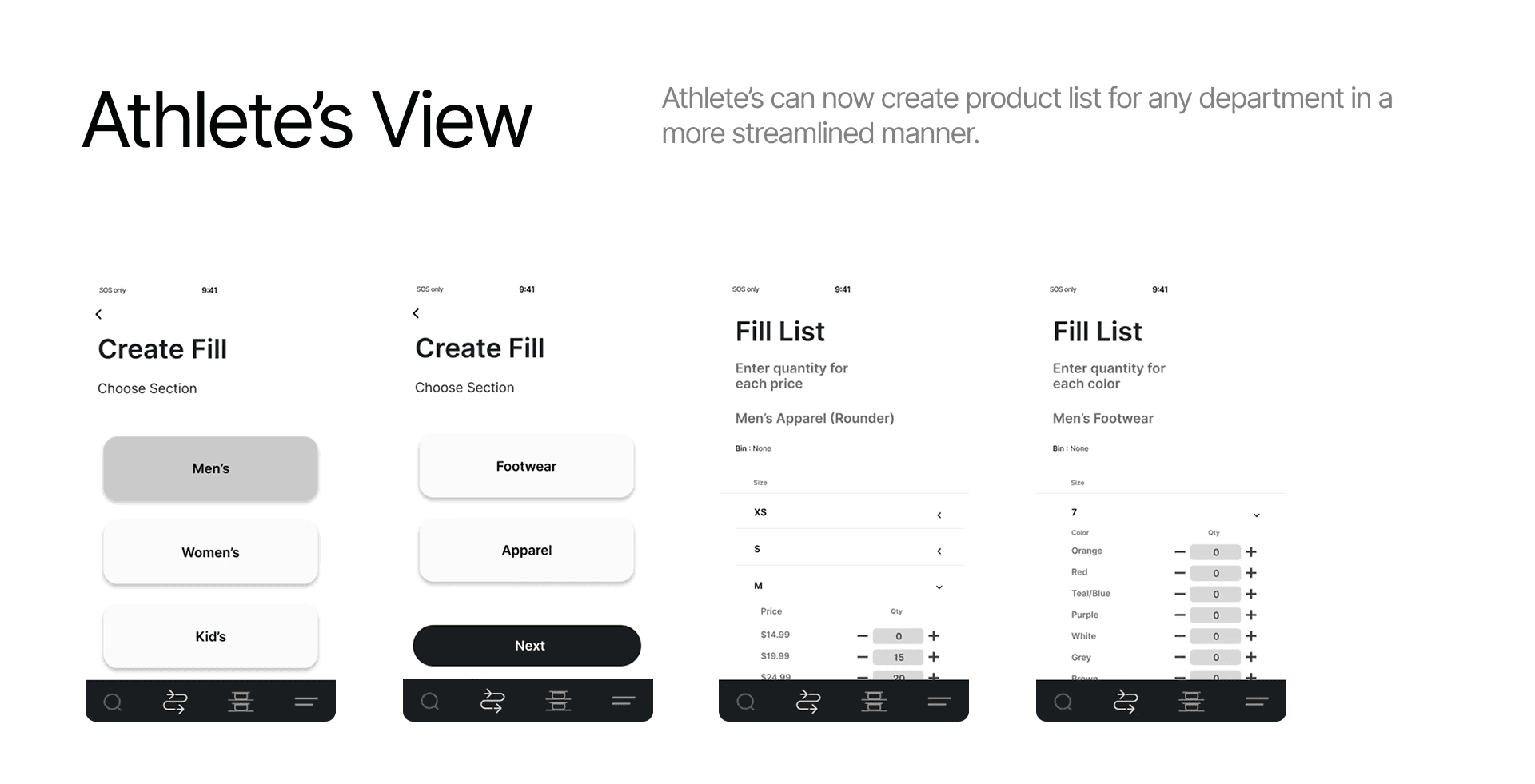
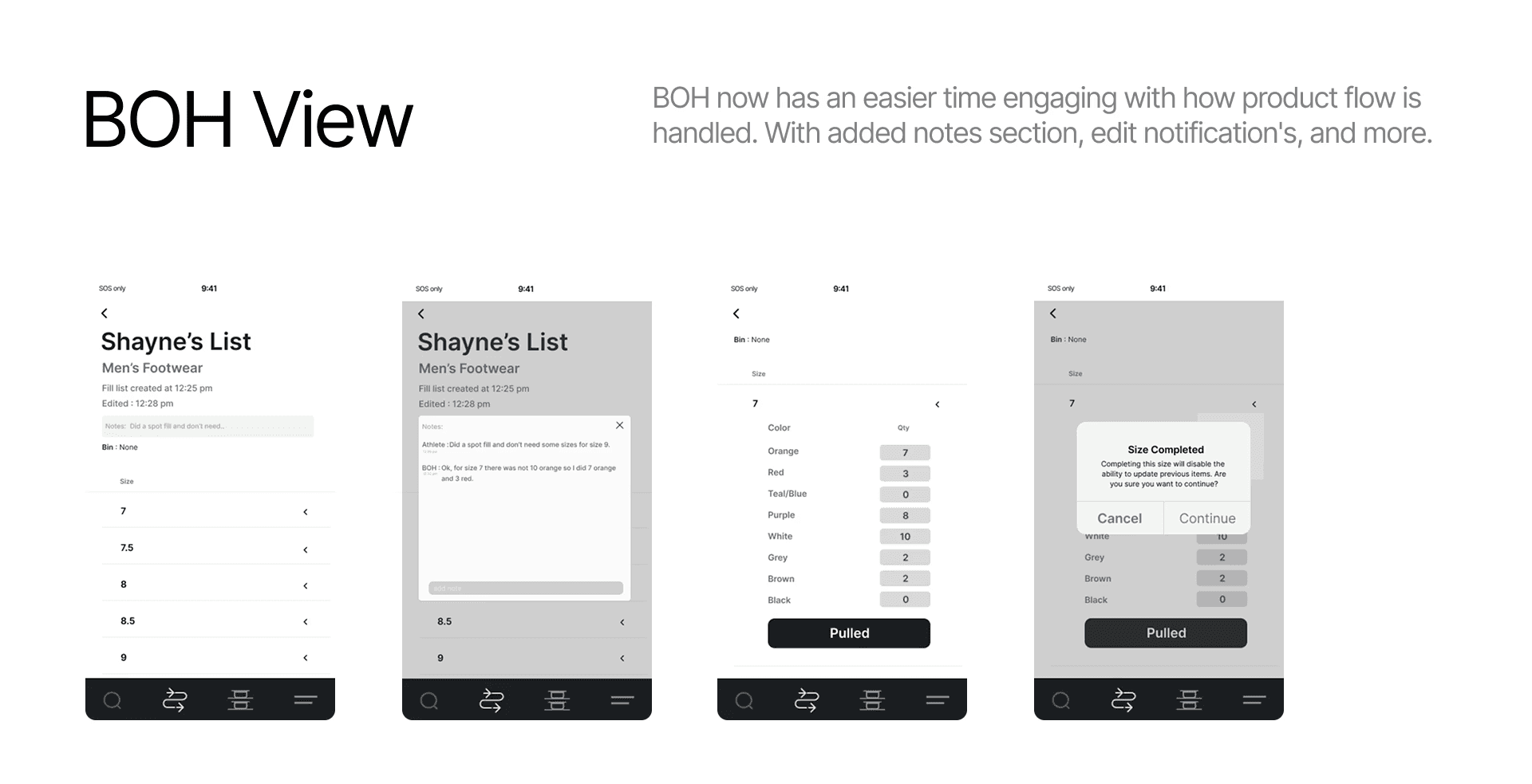
BOH and athletes now have views built around how they actually work. BOH gets edit notifications, threaded notes, and confirmation prompts when sizes are completed. Athletes can create product lists for any department organized exactly how they think on the floor. Apparel by price point. Footwear by size and color.
[ CONCLUSION ]

This project didn't come from a brief. It came from standing on that floor and feeling where the friction was. The problems I captured here are just the surface but noticing them and designing toward a solution is where everything starts. The goal was never just to clean up a process. It was to make the work better for every single person doing it every single day.


Built for the floor. By the floor.